
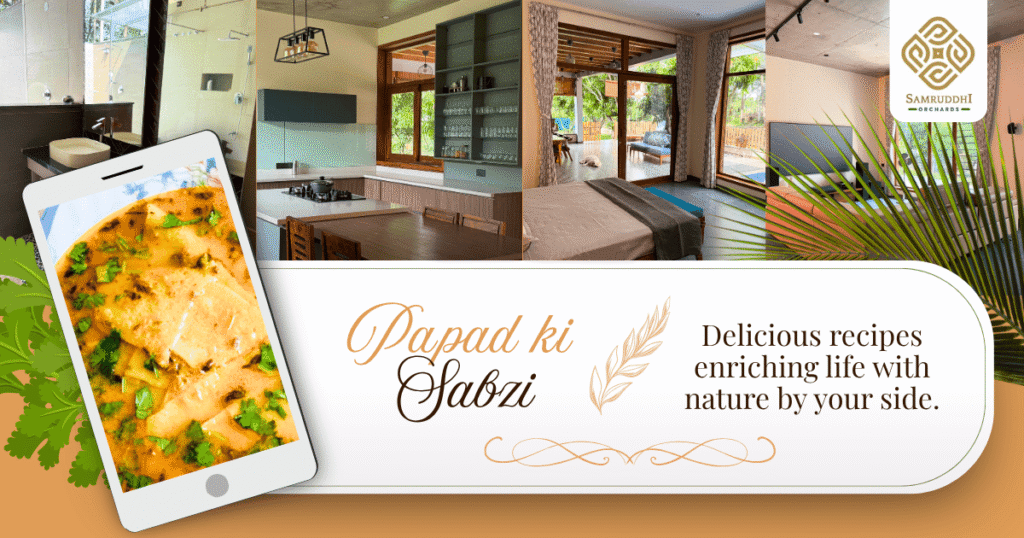
Ingredients
- Papads: 3–4 roasted and broken into pieces.
- The Mix: 1 cup yogurt + 1.5 tbsp Besan + 1.5 cups water (whisked until smooth).
- The Masala: 1 tsp red chili powder, ½ tsp turmeric, 1 tsp coriander powder.
- The Tempering: 2 tbsp ghee, ½ tsp mustard seeds, ½ tsp cumin seeds, a pinch of hing, 2 dried red chilies, and a few curry leaves.
Instructions
- Prepare the “Slurry” – In a large bowl, whisk the yogurt and besan together until there are no lumps. Add the turmeric, chili powder, and coriander powder. Slowly stir in the water to create a thin, uniform liquid.
- Cook the Base – Heat ghee in a heavy-bottomed pan. Add the mustard seeds, cumin, hing, dried red chilies, and curry leaves. Once they crackle, pour in the yogurt-besan mixture.
- Simmer and Thicken – Keep the heat on medium and stir continuously until the mixture comes to a boil. Once it boils, lower the heat and let it simmer for 5–7 minutes.
- Add the Papads – Add salt (remember, papads are salty!) and a crush of kasuri methi. Gently drop in the roasted papad pieces. Cook for just one more minute.
- Garnish – Turn off the heat and top with plenty of fresh coriander.
Note: The besan needs this time to cook through so it doesn’t taste “raw” and to help the gravy thicken to a creamy consistency.
Why We Love This Recipe:
- Meal Prep Friendly: Unlike the plain yogurt version, the besan-based gravy holds up much better. You can make the gravy in advance and just drop the papads in right before you eat.
- Satisfying: The added protein from the besan makes it a more filling meal during a short lunch break between meetings.
The history of Papad ki Sabzi is a masterclass in culinary survival and creativity. It wasn’t born in a royal kitchen to impress a king; it was born in the middle of the Thar Desert out of pure necessity.
Here is the “why” and “how” behind this iconic dish:
- The Desert’s Challenge – Rajasthan’s arid climate and frequent droughts meant that for months at a time, fresh green vegetables were impossible to find. Water was scarce, and the heat was unforgiving. To survive, Rajasthanis mastered the art of “Grains and Sun-Drying.” They turned lentils into flours (Besan), sun-dried dumplings (Mangodi), and thin, crispy discs (Papad) that could be stored for months without spoiling.
- The “Vegetable” Substitute – In the absence of bhindi, pumpkin, or peas, the Papad itself became the “vegetable.” Housewives realized that by dunking these protein-rich lentil discs into a gravy made of yogurt (which was usually available from household cattle), they could create a complete, nutritious meal.
- The Jain Connection – The recipe has deep roots in the Jain community of Rajasthan. During the holy period of Paryushan or even on certain days of the lunar calendar, many Jains refrain from eating green leafy vegetables or anything grown underground (like potatoes or onions). During these times, Papad ki Sabzi becomes a primary source of sustenance because it relies entirely on dried lentils and dairy.
Cultural Significance
- The “Emergency” Curry: Historically, if an unexpected guest arrived and the pantry was bare, a Rajasthani host would never let them go hungry. Papad ki Sabzi was the “instant” solution that could be prepared in under 15 minutes.
- A Symbol of Resourcefulness: It represents the Rajasthani philosophy of “Jaisa desh, waisa bhesh” (adapting to your environment). They took the simplest dry ingredients and used spices like Hing, Jeera, and Mathania chilies to make them taste like a feast.
Evolution
While the ancient version was likely just papad in a thin buttermilk broth, over centuries it evolved. The version you asked for—adding Besan—is a more modern adaptation that makes the dish heartier and more “restaurant-style,” bridging the gap between a simple home meal and a rich festive curry.
Fun Fact: In Hindi, there is a popular idiom, “Papad Belna” (literally: to roll out papads), which means to go through a lot of hard work or struggle. This perfectly captures the effort Rajasthani women put into preserving food for the dry months!
Since we’re talking about history and community, would you like to know about other “desert survival” recipes like Ker Sangri or Gatte ki Sabzi?
About the Contributor
Ruche, founder of HEN, comes from a Marwari family with roots in Haryana, Madhya Pradesh, and Rajasthan. Papad ki sabzi is a cherished family favourite, deeply tied to her childhood memories. Made lovingly by her mother and one of her grandmothers, the dish carries a flavour she continues to recreate in her Bangalore kitchen. Best enjoyed with roti, rice, or paratha, this recipe is her way of sharing a piece of her heart and family legacy.
Follow their journey on Instagram Ruchem Mittal.